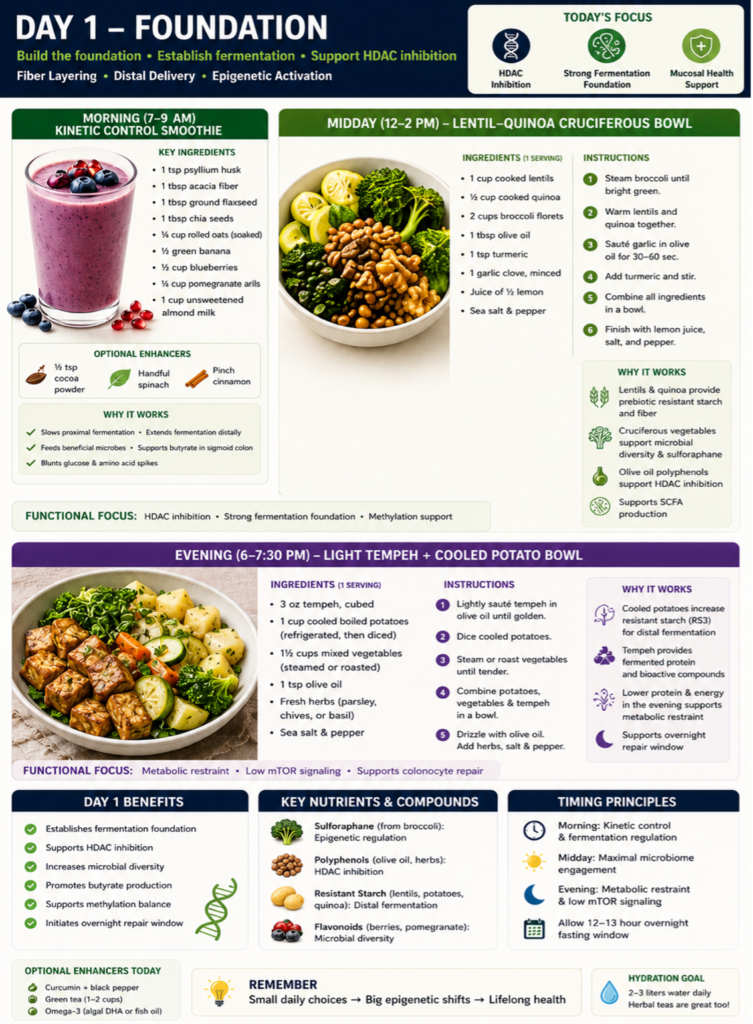
Day 1 Menu
Day 1: Building the Foundation for Distal Fermentation and Butyrate Production
The first day establishes the biological foundation for the entire Epigenetic Diet. Rather than simply increasing fiber intake, each meal is designed to deliver fermentable substrates to progressively more distal regions of the colon while simultaneously providing epigenetic signals that favor a healthy colonocyte phenotype.
The morning begins with a viscous, fiber-rich smoothie containing psyllium, acacia fiber, oats, flaxseed, and green banana resistant starch. Together these fibers create a gel-like matrix that slows microbial access to fermentable carbohydrates. Instead of being consumed rapidly in the proximal colon, fermentation is extended over time, preserving substrate for delivery farther into the distal colon. Polyphenol-rich berries and green tea provide the day’s first epigenetic signals while also helping shape a healthier microbial community. The overall goal of breakfast is to initiate sustained fermentation while beginning microbial modulation.
By midday, the emphasis shifts toward expanding microbial diversity and activating multiple protective signaling pathways. Lentils, chickpeas, whole grains, and cruciferous vegetables provide a broad spectrum of fermentable fibers, resistant starch, and phytochemicals. These foods nourish numerous bacterial species simultaneously, increasing production of short-chain fatty acids while exposing colonocytes to a diverse array of epigenetic compounds. Rather than stimulating a single pathway, this meal activates multiple complementary mechanisms that regulate inflammation, cellular metabolism, differentiation, and epithelial repair.
The evening meal deliberately changes strategy. Instead of maximizing nutrient intake, it is designed to sustain fermentation while limiting prolonged nutrient signaling. A modest serving of fish or tempeh supplies adequate protein without excessive activation of the mTOR pathway. Cooked and cooled potatoes provide resistant starch that continues to ferment during the overnight hours, while vegetables contribute additional fermentable substrate and polyphenols. As amino acid concentrations gradually decline during the evening, mTOR activity falls and microbial fermentation continues, allowing butyrate production to extend toward the rectosigmoid colon when nutrient delivery from earlier meals would otherwise be exhausted.