
Introduction
Colorectal cancer develops through a characteristic progression known as the adenoma–carcinoma sequence, in which benign polyps gradually acquire genetic and epigenetic alterations over approximately 10–15 years before evolving into invasive cancer.
This prolonged developmental window provides an extraordinary opportunity for prevention. Today, that opportunity is realized primarily through screening colonoscopy and noninvasive screening tests that identify precancerous lesions before they become malignant. Increasingly, research suggests that prevention may begin even earlier by modifying the biological processes that initiate tumor development. Dietary and pharmacologic interventions may influence these earliest molecular events long before a lesion becomes clinically detectable.
For decades, colorectal cancer was considered largely a disease of older adults. Since the widespread adoption of screening colonoscopy, mortality from late-onset colorectal cancer (LOCRC) has declined by more than 30% in the United States, representing one of the most important public health successes of the past half-century.
Early-Onset Colorectal Cancer (EOCRC)
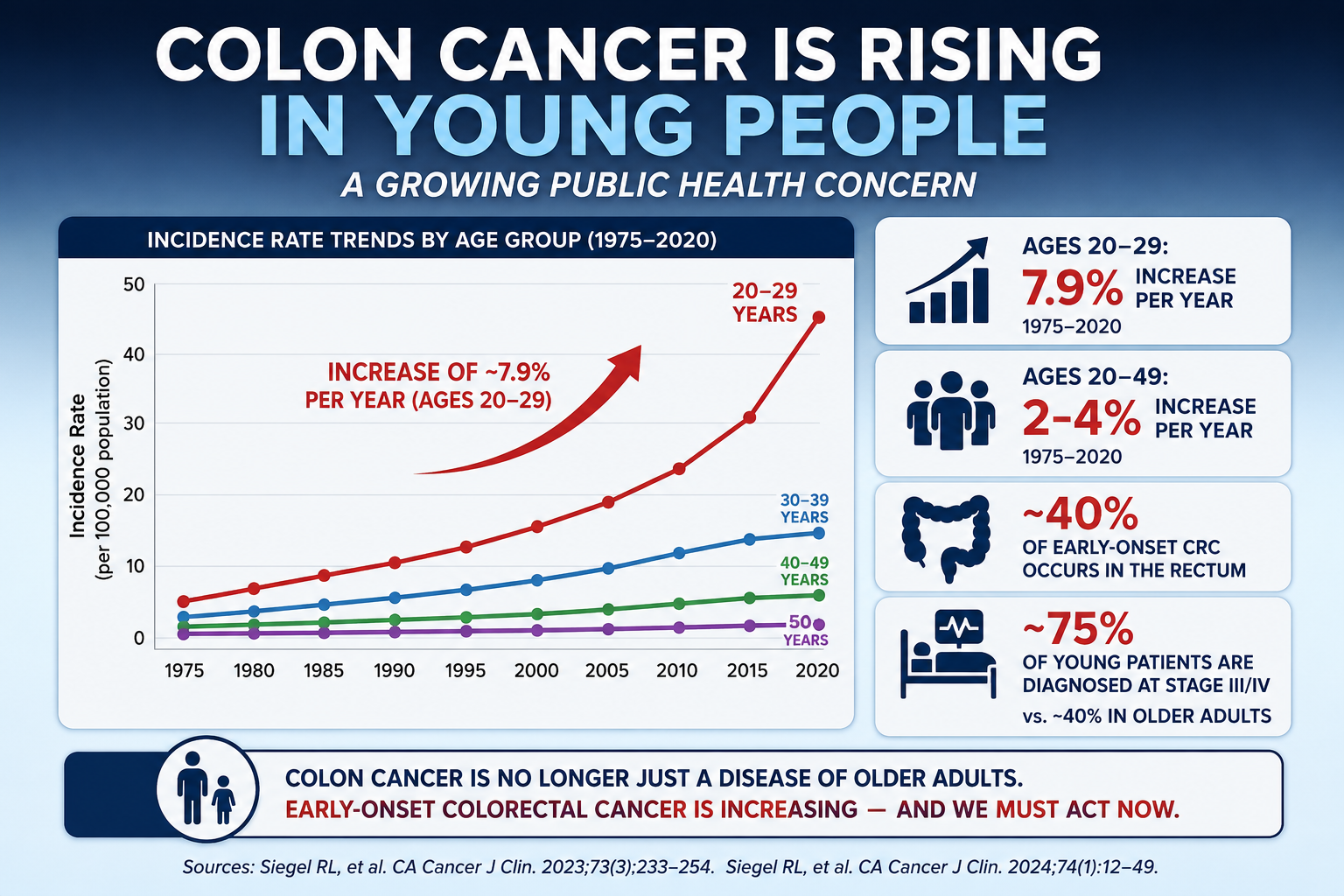
While colorectal cancer has declined among older adults, a troubling new pattern has emerged. Colorectal cancer occurring in individuals younger than 45 years of age, termed early-onset colorectal cancer (EOCRC), has increased steadily over the past several decades.
Overall incidence is increasing by approximately 2–4% each year. Among adults 20–29 years of age, the annual increase approaches 7.9%, making EOCRC one of the fastest-growing cancers in young adults.
Rectosigmoid Location
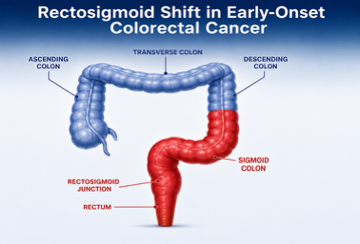
Equally striking is a shift in tumor location. Whereas colorectal cancers in older adults are distributed relatively evenly throughout the colon, EOCRC occurs disproportionately in the distal colon, particularly the descending colon, sigmoid colon, and rectum. Approximately 40% of EOCRC cases arise in the rectum, suggesting that this disease may follow a biologically distinct pathway (Siegel et al., CA: A Cancer Journal for Clinicians, 2023).
Together, these observations indicate that EOCRC is becoming more common, more advanced at diagnosis, and anatomically distinct from traditional late-onset colorectal cancer.
Why Our Current Approaches Are Not Enough
The remarkable rise in early-onset colorectal cancer suggests that our current approach to prevention, while highly effective, may no longer be sufficient by itself. Colonoscopy remains one of medicine’s greatest preventive tools, allowing physicians to detect and remove precancerous polyps before they progress to invasive cancer. Yet even the most successful screening program begins only after abnormal tissue has already formed. As colorectal cancer continues to appear in younger adults, many of whom are below the recommended screening age or develop disease between screening examinations, it has become increasingly important to ask an earlier question: Why are these lesions developing in the first place?
The future of prevention may therefore require moving beyond the detection of precancerous lesions toward understanding the biological conditions that allow them to arise. Advances in epigenetics, microbiome science, and nutritional biology now suggest that the earliest stages of colorectal carcinogenesis may be influenced long before a polyp becomes visible. If we can better understand how diet shapes the molecular environment of the colon, we may be able not only to remove precancerous lesions, but also to reduce the likelihood that they develop at all.
Inherited DNA sequence is unchangeable during the lifetime, but diet, microbial metabolism, and many epigenetic processes remain modifiable. Our diet and the biological signals our diet generates after interacting with the microbiome determines the health of the colon
This distinction provides the scientific foundation for a new approach to colorectal cancer prevention; one that seeks not merely to detect disease earlier, but to influence the biological conditions from which it arises.