
Chapter 2 Epigenetics: The Colonocyte’s Adaptive Operation System
Epigenetics refers to the molecular mechanisms that determine which genes are active, which genes are silenced, and how cells interpret the information contained within their DNA. Every colonocyte contains essentially the same genetic code. Genes establish the biological possibilities available to a cell, but epigenetics determines which of those possibilities are actually expressed at any given moment.
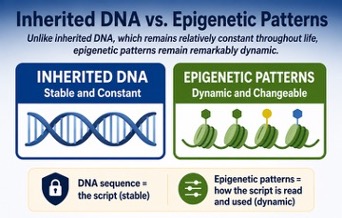
Unlike inherited DNA, which remains relatively constant throughout life, epigenetic patterns remain remarkably dynamic. They change continuously in response to diet, the microbiome, aging, circadian rhythms, inflammation, physical activity, environmental exposures, and metabolic stress. This flexibility allows colonocytes to adapt rapidly to an ever-changing environment (Feinberg AP 2018).
Colonocytes exist within one of the body’s most dynamic areas, where they are continuously exposed to nutrients, microbial metabolites, inflammatory mediators, toxins, and mechanical stress. To remain healthy, these cells must constantly adjust their patterns of gene expression in response to changing environmental conditions. Epigenetics provides the molecular machinery that makes this adaptation possible.
1. The Epigenetic Machinery
Epigenetics have been studied in both humans and experimental models. This knowledge constitutes a fundamental principle of molecular biology
Four major mechanisms comprise the epigenetic system:
- DNA methylation regulates whether genes are turned on or off by adding methyl groups to DNA.
- Histone modification alters how tightly DNA is wrapped around histone proteins, controlling access to genetic information.
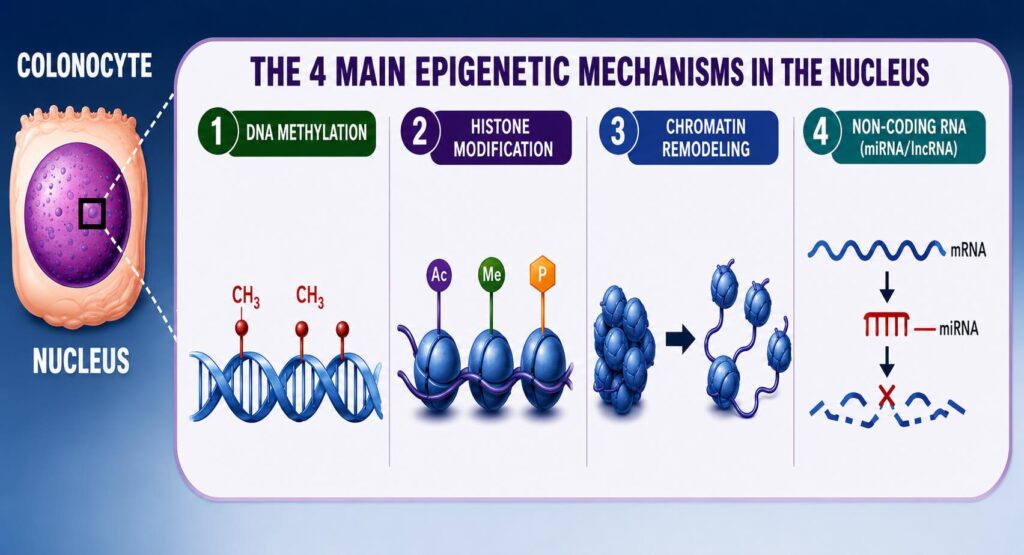
- Chromatin remodeling reorganizes the three-dimensional structure of DNA, determining which regions are accessible for transcription.
- MicroRNA regulation fine-tunes gene expression after transcription by controlling the stability and translation of messenger RNA.
These mechanisms are in the nucleus of the colonocyte, awaiting signals from the colon lumen. When these signals are received, the machinery is activated and initiate changes in the shape of the DNA helix. These changes subsequently determine which genes are expressed on inhibited.
2. Translating Environmental Information
The primary function of the epigenetic system is to convert environmental information into biological action (Feil R et al 2012).
Every day, the colonocyte receives millions of biochemical signals arising from food, microbial metabolism, immune activity, hormones, oxidative stress, and cellular metabolism. Epigenetic mechanisms continuously evaluate these signals and modify gene expression accordingly.
3. Epigenetics Activates Healthful Colonocyte Functions
Through this process, colonocytes can activate genes responsible for many functions crucial to the health of the colon.
At the same time, epigenetic regulation suppresses pathways that promote excessive inflammation, oxidative injury, uncontrolled proliferation, and malignant transformation.
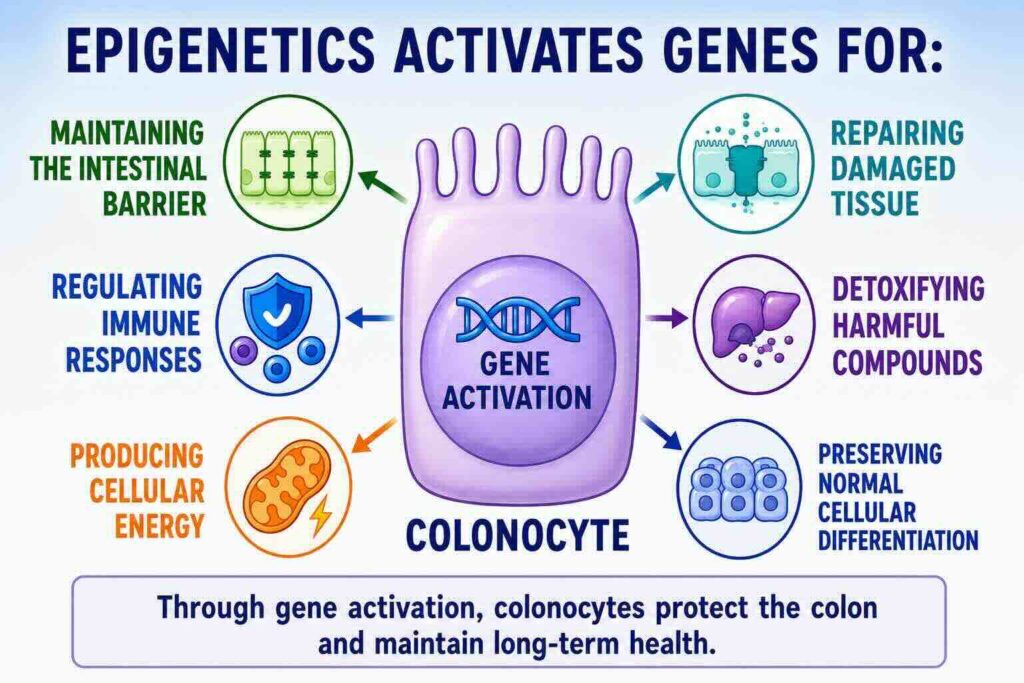
Epigenetics therefore functions as the colonocyte’s adaptive operating system, translating environmental information into coordinated patterns of gene expression. Nutrients and microbial metabolites provide the information; the epigenetic machinery determines how that information influences cellular behavior.
Epigenetic Failure and Disease
When epigenetic regulation functions normally, intestinal homeostasis is maintained despite constant exposure to enormous microbial and dietary challenges.
When these adaptive mechanisms become overwhelmed or dysregulated, however, the consequences accumulate over many years. Abnormal DNA methylation, altered histone modifications, disrupted chromatin architecture, and dysregulated microRNA expression gradually impair normal cellular function. The result is chronic inflammation, loss of epithelial integrity, impaired cellular differentiation, and increasing epigenetic instability (Baylin SB 2011).
These changes frequently precede visible disease. Long before a tumor becomes clinically apparent, epigenetic dysregulation may have already altered the behavior of the colonocyte, creating a surrounding that favors the later accumulation of genetic mutations and malignant transformation.
Conclusion
Epigenetics functions as an adaptive operating system for the colonocyte. Nutrients, microbial metabolites, inflammatory signals, and metabolic stress continuously shape patterns of gene expression that determine barrier integrity, energy production, immune regulation, cellular repair, and tissue homeostasis.
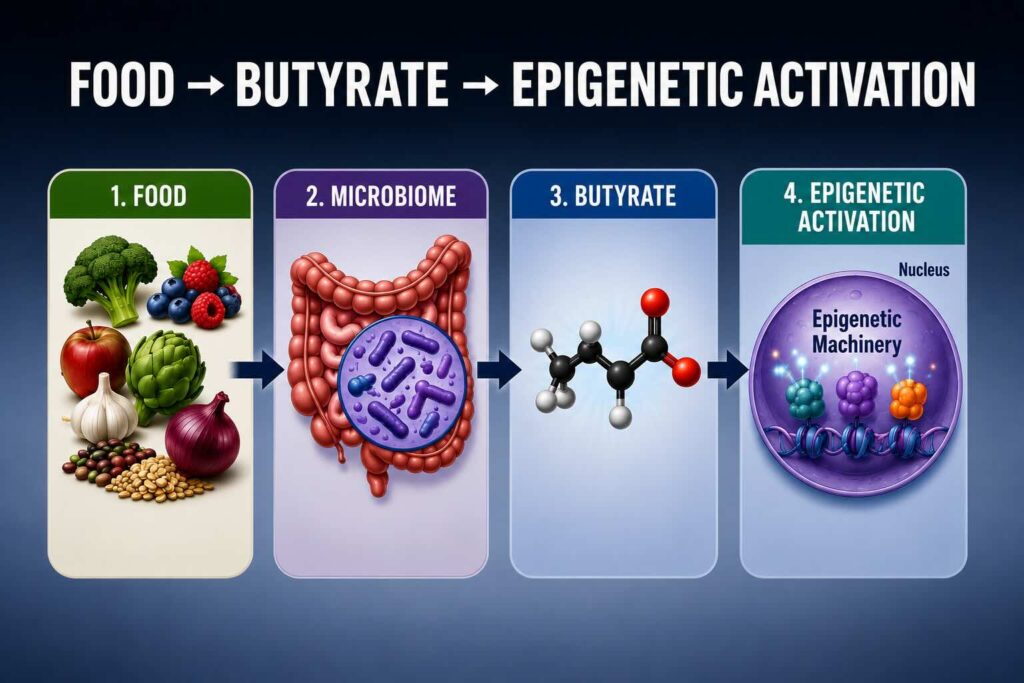
This concept forms the scientific foundation for the remainder of this book. If diet can modify the microbiome, and the microbiome produces metabolites that influence the epigenetic machinery, then food becomes far more than a source of calories. It becomes a continuous stream of biological information capable of influencing gene expression, cellular behavior, and ultimately the long-term health of the colon.
Looking Ahead
Understanding epigenetics explains how diet influences gene expression, but it immediately raises another question: Which dietary components exert the greatest epigenetic influence on the colon?
Among all nutrients that reach the large intestine, soluble fiber may be the most important. Unlike most carbohydrates, soluble fiber escapes digestion in the small intestine and becomes the primary fuel for the colonic microbiome. Through microbial fermentation, it generates butyrate, the principal energy source for healthy colonocytes and one of the most powerful naturally occurring regulators of the epigenetic machinery (Bultman SJ 2017).
Thus, soluble fiber performs two essential functions simultaneously. It nourishes the colonocyte by supplying its preferred metabolic fuel, and it shapes gene expression by providing metabolites that influence DNA methylation, histone modification, chromatin remodeling, and other epigenetic pathways. In many respects, soluble fiber is the nutritional link that connects diet, the microbiome, metabolism, and epigenetic regulation.
The next chapter explores why soluble fiber occupies this central position in colon biology and how maintaining adequate butyrate production may be one of the most effective dietary strategies for preserving colonocyte health and reducing the risk of colorectal cancer.
References
- Bird A. Perceptions of epigenetics. Nature. 2007;447(7143):396-398.
- Goldberg AD, Allis CD, Bernstein E. Epigenetics: a landscape takes shape. Cell. 2007;128(4):635-638.
- Jones PA, Baylin SB. The epigenomics of cancer. Cell. 2007;128(4):683-692.
- Baylin SB, Jones PA. A decade of exploring the cancer epigenome—biological and translational implications. Nat Rev Cancer. 2011;11(10):726-734.
- Feinberg AP. The key role of epigenetics in human disease prevention and mitigation. N Engl J Med. 2018;378(14):1323-1334.
- Issa JPJ. CpG island methylator phenotype in colorectal cancer. Nat Rev Cancer. 2004;4(12):988-993.
- Lao VV, Grady WM. Epigenetics and colorectal cancer. Nat Rev Gastroenterol Hepatol. 2011;8(12):686-700.
- Bannister AJ, Kouzarides T. Regulation of chromatin by histone modifications. Cell Res. 2011;21(3):381-395.
- Kouzarides T. Chromatin modifications and their function. Cell. 2007;128(4):693-705.
- Bartel DP. MicroRNAs: genomics, biogenesis, mechanism, and function. Cell. 2004;116(2):281-297.
- Nana-Sinkam SP, Croce CM. MicroRNAs as therapeutic targets in cancer. Transl Res. 2011;157(4):216-225.
- Feil R, Fraga MF. Epigenetics and the environment: emerging patterns and implications. Nat Rev Genet. 2012;13(2):97-109.
- Herceg Z, Vaissière T. Epigenetic mechanisms and cancer: an interface between the environment and the genome. Epigenetics. 2011;6(7):804-819.
- Bultman SJ. Interplay between diet, gut microbiota, epigenetic events, and colorectal cancer. Mol Nutr Food Res. 2017;61(1):1500902.
- Donohoe DR, Collins LB, Wali A, et al. The Warburg effect dictates the mechanism of butyrate-mediated histone acetylation and cell proliferation. Mol Cell. 2012;48(4):612-626.
- Feinberg AP. The epigenetic progenitor origin of human cancer. Nat Rev Genet. 2004;5:911–917.